How is the book organized?
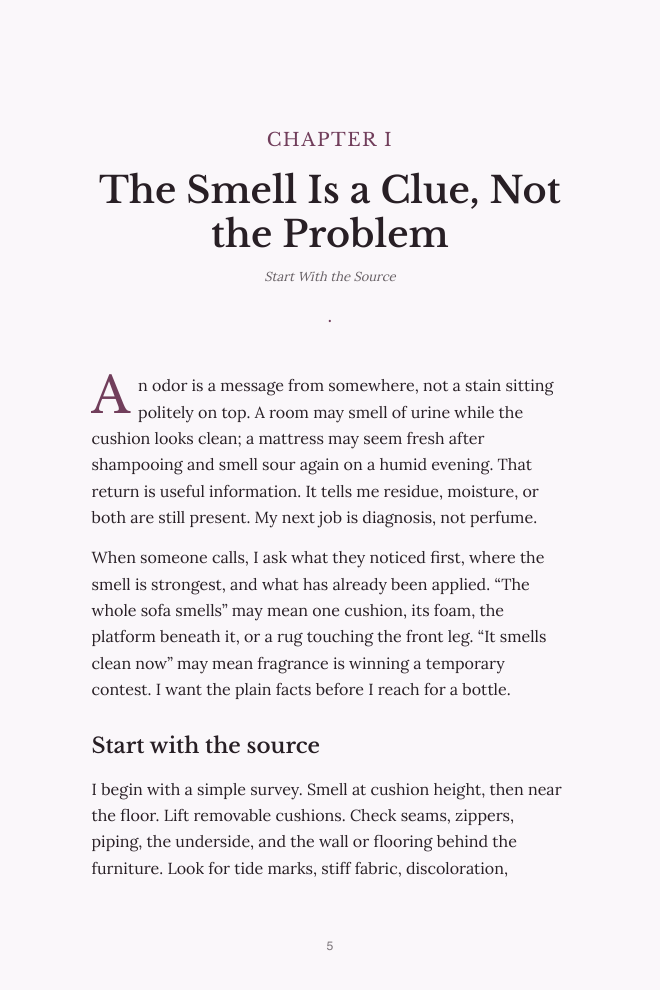
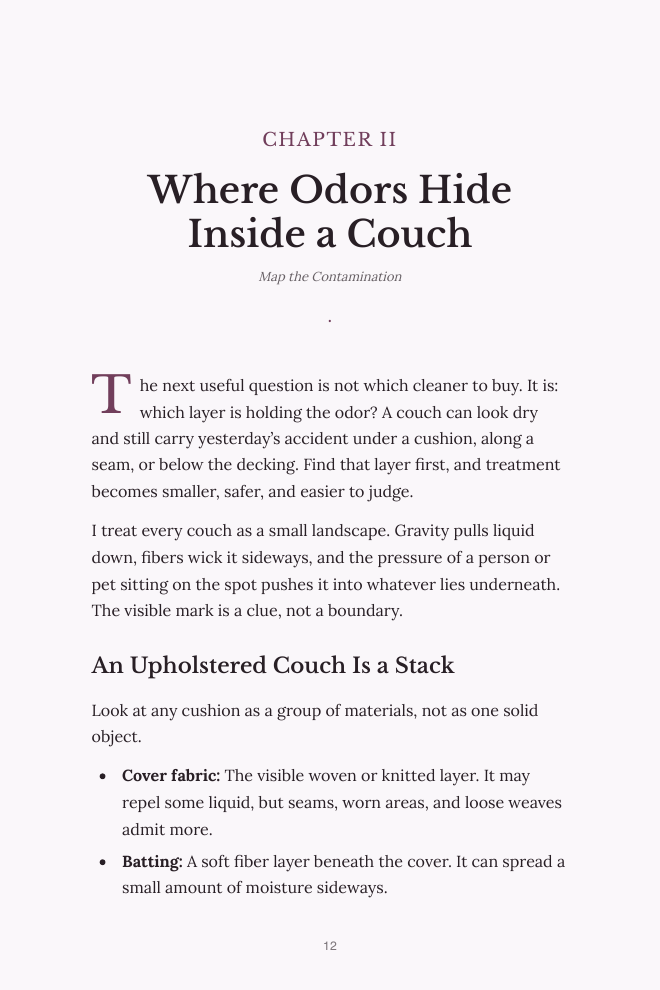
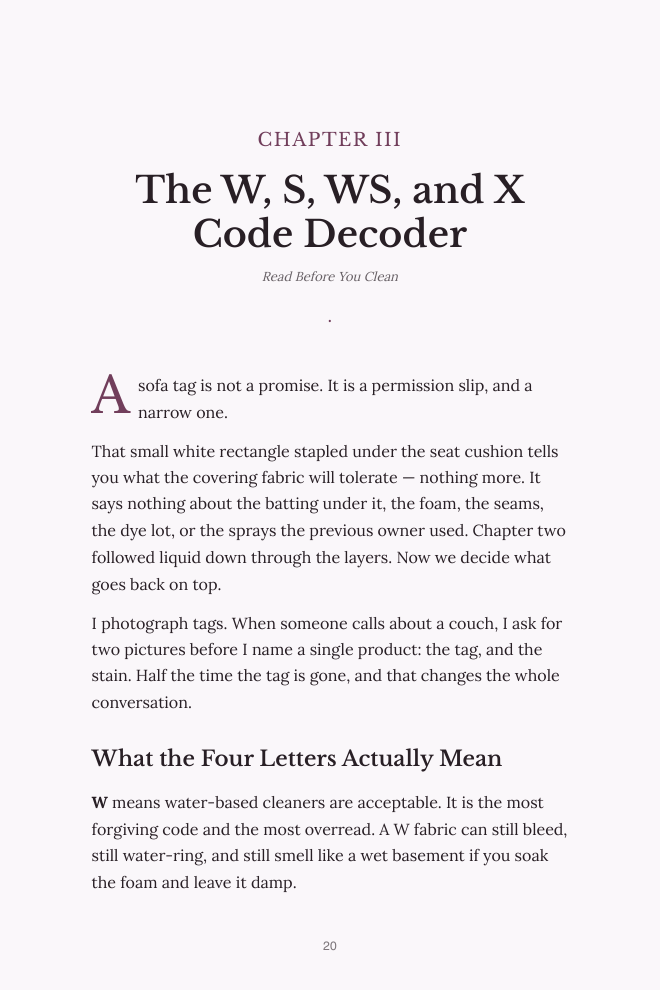
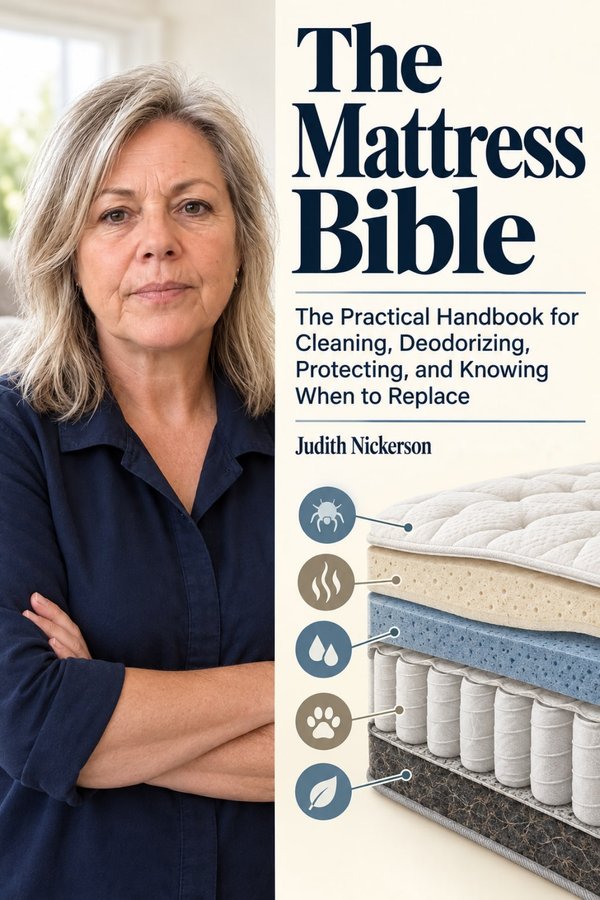
Eight chapters. It starts with finding the odor source, then covers where odors hide inside a couch, the W, S, WS and X care-code decoder, enzyme cleaners, odor that comes back, mattress yellowing, the first move for urine, vomit, coffee and blood, and drying, rechecking and prevention.
Do I need upholstery-cleaning experience?
No prior experience is assumed. The guide begins with observable evidence: smell location, timing, seams, labels, moisture, visible edges, removable covers, and hidden-area tests. The procedures ask you to identify the material and source before choosing a treatment.
What kinds of problems does the book cover?
It covers hidden couch odor, pet urine residue, upholstery layers, W, S, WS, and X care codes, enzyme use, returning odor, mattress yellowing, and first responses for urine, vomit, coffee, and blood. It also covers drying, reassessment, prevention, and practical stop conditions.
Will it help if the odor returns after cleaning?
Yes. The book explains how humidity, pressure, remaining residue, trapped moisture, foam, batting, decking, flooring, and wood can make an odor noticeable again. Its decision path helps you determine whether to repeat a compatible treatment, inspect a deeper layer, consider foam replacement, or seek further assessment.
Does the guide recommend one cleaner for every stain?
No. Urine, vomit, coffee, and blood have different first moves, temperature concerns, cleaner families, hygiene considerations, and fabric-code limits. The guide also warns against casual mixing and repeated applications made before the previous treatment has dried.
Does it explain upholstery care codes?
Yes. The code decoder covers W, S, WS, and X, including suitable cleaner families, hidden-area testing, major risks, and signs to stop. It also addresses missing tags, blended materials, loose covers, unstable dyes, down inserts, and unknown prior treatments.
Do I need an extraction machine?
Not necessarily. Small accessible areas may respond to controlled blotting. An extractor is useful only when the care code and construction permit wet cleaning, and the guide explains why a machine can remove loosened residue or drive moisture deeper if used without a clear diagnosis.
How does the mattress section distinguish yellow marks?
It compares sweat-and-oil yellowing, urine, water tide lines, and age-related foam discoloration by location, edge shape, smell, moisture response, and realistic treatment goal. The procedure emphasizes low moisture, blotting, airflow, complete drying, and never remaking a damp bed.
Is there a guarantee?
Yes, a 7-day money-back guarantee. Questions or a refund? Just reply to the purchase email you got from Hotmart. A real person answers.